When building a business, your brand is one of your most valuable assets. Whether you are launching a tech startup, a fashion label, or a local coffee shop, your name, logo, and slogan help setting you apart from competitors and connect with your customers. But how do you protect those brand elements from being used or misused by others? The answer lies in trademark protection.
What Is a Trademark?
Trademark is a word, phrase, symbol, design or even a combination of these elements that identifies and distinguishes the source of goods or services. Think of iconic names like Microsoft, Starbucks distinctive logos like the Nike symbol, or catchy taglines like “Just Do It.” These marks serve as identifiers in the marketplace, allowing consumers to recognize the source of a product or service instantly.
Trademarks can protect:
- Brand names
- Logos and icons
- Slogans
- Product packaging and design (trade dress)
- Even scents, sounds or colors and 3-d designs in some cases
How To Choose a Mark?
Choosing the mark is an important first step, as not all marks have the same level of legal protection. The strength of a trademark is determined by how distinctive it is.
Strong Trademarks:
These are inherently distinctive and easier to register and enforce:
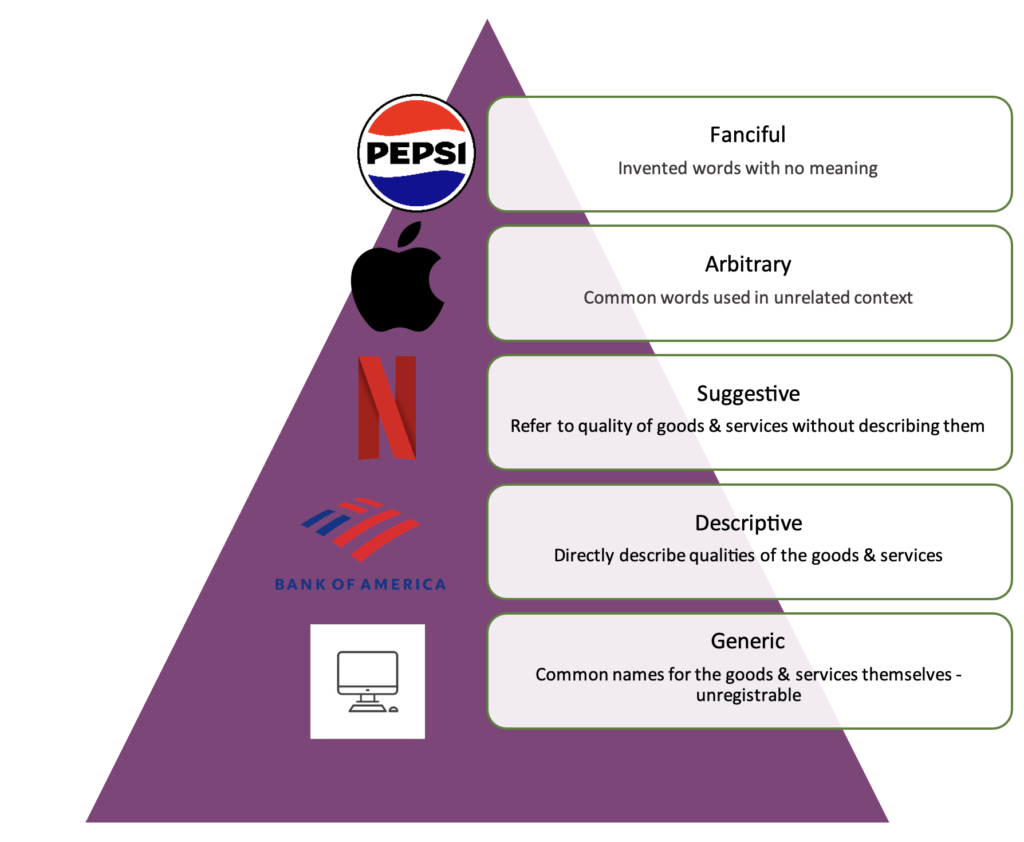
- Fanciful marks: Invented words with no prior meaning (e.g., Adidas, Pepsi)
- Arbitrary marks: Existing words used in a completely unrelated context (e.g., Apple for computers)
- Suggestive marks: Indirectly reference the product’s qualities (e.g., Netflix for web-based streaming, Coppertone for tanning products, Burger King for burgers restaurant)
Weaker Trademarks:
These face more legal hurdles and offer less protection:
- Descriptive marks: Directly describe a quality or feature (e.g., “Cold and Creamy” for ice cream, or Bank of America for banks in America). These are only protectable with “secondary meaning” – proof that consumers associate the mark with your business, due to the strong brand recognition that has been created over time. (e.g. American Airlines, Holiday Inn.)
- Generic terms: Common words for a product or service (e.g., “Computer” for computers) cannot be trademarked.
When choosing a name for your brand, avoid generic or overly descriptive terms. A unique and distinctive name not only makes it easier to register your trademark but also helps your brand stand out and remain protected.
Trademark Search
After you have chosen the mark, you would like to use, the next step is searching if the mark, or a confusingly similar mark, already registered with the USPTO or is being used by a third party. The U.S. Patent and Trademark Office (“USPTO”) may refuse to register a mark that is confusingly similar in sound or commercial impression to a registered mark if they are in the same, or similar goods and services to the applied for mark.
How to Protect a trademark?
Marks can be protected under common law of unfair competition if not registered or registered within the State. This protection is limited to the owner of the mark being the first to use it, and to the geographic area of which the mark is being used. The protection is limited and more difficult to enforce. On the other hand, registration of the Mark with the USPTO provides significant ownership rights under the Lanham Act which makes it easier to pursue in court if needed. After you choose your mark and search for confusingly similar marks, the next step will be to register it with the USPTO.
Registering with the USPTO create the following protections:
- Prima Facie Evidence: Registration constitutes prima facie evidence of the mark’s validity, the registration of the mark, the owner’s ownership of the mark, and the owner’s exclusive right to use the registered mark in commerce on or in connection with the goods or services specified in the certificate. This is also an evidence that the owner was the first to use the mark in connection with the goods and services.
- Constructive Notice: Registration serves as constructive notice of the registrant’s claim of ownership of the mark, which forecloses some defenses in infringement actions. The owner shall use the ® insignia following the registration.
- Incontestability: A mark can become incontestable once it has been registered for five years. When a mark becomes incontestable, the registration becomes conclusive evidence of the validity of the registered mark and of the registrant’s exclusive right to use the registered mark in commerce.
- Import Protection: Registration enables the trademark holder to stop the importation into the United States of articles bearing an infringing mark.
- Nationwide Priority: under the Lanham Act, USPTO registration provides nation-wide protection to registered marks, and once the certificate has been issued, no person can acquire any additional rights superior to those obtained by the federal registrant
Registration with the USPTO is a long-term investment in your brand and its name.
Build a Strong Brand with the Right IP Strategy
A trademark is more than a name or logo. It can be a valuable business asset that contributes to your company’s identity, growth, and long-term value. Kyberia works with businesses to identify the intellectual property that matters most, develop strategies to protect those assets, and navigate trademark registration and other IP matters with their broader business goals in mind.
If you are developing a new brand, expanding your intellectual property portfolio, or have questions about protecting trademarks you already use, contact Kyberia to discuss the right strategy for your business.
Ready to protect your brand? Contact us today for a consultation.
